
Dominoes - Classic Domino Game
Italic GamesBoard
4.9250.00 Reviews
- Version
- 1.3.0
- Installs
- 100.00K
- Age Rating
- Everyone
Screenshots
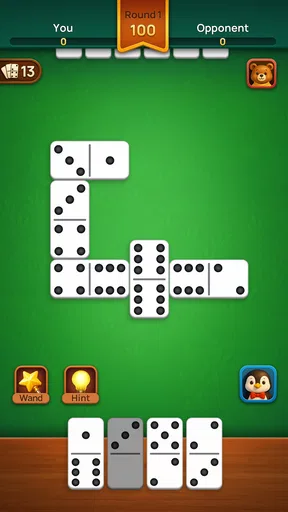
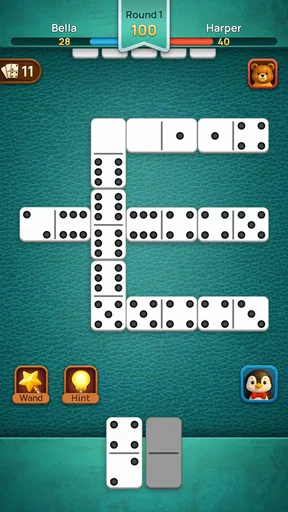
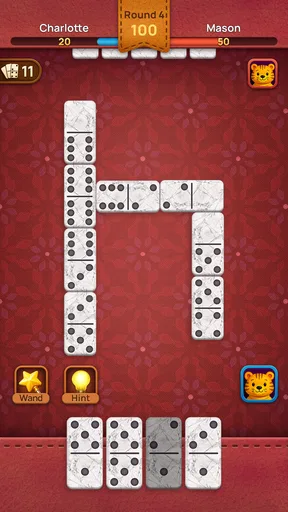
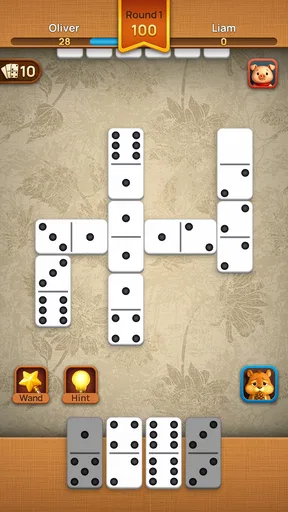

Our Review of Dominoes - Classic Domino Game
 Analysis by Appyee
I approached Dominoes - Classic Domino Game expecting a straightforward board game, and that is exactly where its appeal begins. It takes the familiar domino format and turns it into a focused mobile activity: match tiles, think about the next placement, and try to avoid leaving yourself with awkward options later. I found it easy to start, but not so shallow that every round felt automatic.
This is a free board game from Italic Games, rated for Everyone and available on devices running Android 6.0 or newer. Its store presence is already substantial, with over 100 thousand installs and a 4.8 average from around 4 thousand ratings. Those figures suggest that the simple format is connecting with a broad audience, although popularity alone does not make every session equally satisfying.
How a normal round feels from the first move
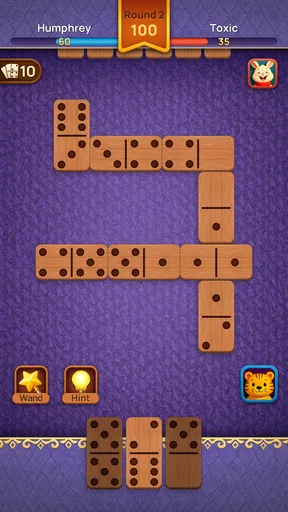
The basic workflow is pleasantly direct. I open the game, begin a round, look at the exposed ends of the chain, and choose a matching tile from my hand. That simplicity matters on a phone because there is very little setup between deciding to play and actually making a move. It works well when I have a few spare minutes, but it also gives me enough room to slow down when I want to think carefully.
The important change in mindset is to stop treating every legal move as equally good. A tile may fit immediately, yet using it can remove the only useful response I have for the next turn. I found myself checking both ends of the layout before touching a tile, then asking which numbers I would still be able to answer if the opponent changed the direction of the round. That small pause is where the game becomes more than simple matching.
For a casual player, the first few rounds are readable without a long tutorial. The rules are familiar enough that the board itself does most of the explaining. Someone who already knows dominoes can settle into a rhythm quickly, while a newcomer can learn by watching which tiles are accepted and how the chain develops.
My preferred everyday use is a short break when I want something interactive but not demanding the way a strategy game with a large map can be. A round gives me a clear beginning, a series of decisions, and an ending that does not require a lengthy commitment. It is also suitable for playing while waiting somewhere, provided I am comfortable giving the board enough attention to avoid careless moves.
That last point is worth stressing. This is not a game I would choose when I want background entertainment that can be ignored. A single distracted placement can change the rest of the round, especially when I have already spent useful tiles on one side of the chain. The interface may be simple, but the decisions are still easier when I give them my full attention.
Small habits that improve the opening
I get better results by scanning my hand before making the first move instead of reacting only to the tile that looks most convenient. I look for repeated numbers, isolated values, and tiles that could connect to more than one future shape. A double can be useful, but playing it immediately just because it is visually distinctive is not always wise. Sometimes keeping it gives me a way to respond later when the board becomes less flexible.
Another useful habit is to remember which numbers have already appeared. I do not try to memorize the entire set perfectly; I simply keep a mental note of the values that seem common and the ones that have become scarce. This changes how I judge a move. A tile that leaves an uncommon number exposed may be harder for the opponent to answer, while a familiar value can keep the game moving but also give them an easy reply.
The strongest early decision is often the move that preserves choices, not the move that looks most active. That principle helped me avoid spending a versatile tile too soon. It is especially useful for players who feel that the game is based only on luck. Luck still affects the hand, but managing flexibility gives each round more shape.
Settings and presentation worth checking
The game’s appeal is its uncluttered board-game presentation. Before settling into longer sessions, I recommend checking the available in-game options rather than assuming the default arrangement will suit everyone. On a small screen, tile visibility and the amount of information shown around the board can affect how comfortably I plan a move. A layout that feels obvious on one phone may feel cramped on another.
I also make a point of checking any sound and notification controls that are available on the device or inside the game. Dominoes does not need loud feedback to be enjoyable, and a quiet setup is better for public places or late-night play. If you prefer a more tactile game feel, keeping suitable move feedback can make placements easier to notice, but I would not let extra effects distract from the ends of the chain.
Because the current version is 1.2.6, I would keep the app updated through the normal store process when an update is offered. That is not a promise that every update will transform the experience; it is simply a sensible way to use the version supported by Italic Games. I would also check that the device meets the minimum Android requirement before installing, since the game needs Android 6.0 or newer.
The most practical setting choice is the one that makes the board readable without making the screen feel busy. I prefer a clear view of my available tiles and the active ends, with no unnecessary interruptions between decisions. If you are handing the phone to a child or a family member who has not played before, a straightforward presentation is helpful because the rules can be learned from the board rather than from a long explanation.
How I play faster without playing carelessly
Once I know the basic rhythm, I use a repeatable three-step scan. First, I identify every tile that can be played. Second, I remove the options that would leave me with only one narrow number. Third, I compare the remaining choices by asking which move gives me the best answer on the following turn. This takes only a moment after practice, and it is more reliable than choosing the first legal tile.
I also try to avoid opening a new possibility for the opponent unless I gain something from it. For example, exposing a number that appears repeatedly in my own hand can be useful because I may be able to continue, but exposing a number that I cannot answer can make the next turn uncomfortable. The right choice depends on the hand, so I treat this as a question of control rather than a fixed rule.
When two moves look similar, I favor the one that keeps my hand balanced. Holding several tiles around one number can be powerful if that number remains active, but it becomes a weakness if the chain moves away. A balanced hand gives me more ways to recover from an unexpected turn. This is one of the clearest differences between playing quickly and playing on autopilot.
For short sessions, I use a simpler version of the same method: check the ends, check the awkward tile, then move. The awkward tile is the one least likely to fit later or the one that would leave a difficult value exposed. Dealing with it early can be correct, but only if doing so does not give away too much control. That quick check keeps casual play brisk without removing the strategic part.
Experienced players can also use the pace of the round as information. If the chain keeps returning to a number, I treat that number as a central resource and avoid wasting all of my matching tiles immediately. If a value disappears for several turns, I become more cautious about relying on it. This is not a guaranteed prediction of the opponent’s hand, but it is a practical way to make decisions with incomplete information.
Where the strategy reaches its limits
Dominoes remains a compact game, and that is both its strength and its limitation. It can reward planning, but it does not offer the depth of a large competitive strategy title with extensive progression, varied boards, or a long campaign. If you want elaborate customization, a wide collection of modes, or a social system built around ongoing competition, this may feel too restrained.
The luck of the opening hand can also determine how much room I have to maneuver. Careful play improves a good position and can rescue some difficult ones, but it cannot always create a winning path from an awkward selection of tiles. I appreciate that uncertainty in short sessions, though players who want complete control may find it frustrating.
Another limitation is that the familiar rules do not automatically create endless novelty. After several rounds, I notice recurring decision patterns: preserve flexible numbers, avoid getting trapped by a narrow end, and watch what has already been played. That is satisfying if I enjoy refining small choices, but less satisfying if I need constant new mechanics to stay interested.
I would skip this game if my main goal were a rich multiplayer community, a story-driven experience, or a visually spectacular board. I would also choose a more complex domino platform if I wanted extensive rule variations and a deep competitive ladder. This version is better suited to someone who values quick access, recognizable rules, and a clean mental challenge over a large feature set.
On the other hand, it is a strong choice for a family member who wants a familiar game without learning an elaborate control scheme. The Everyone rating makes it broadly approachable, and the free price removes the need to commit financially before deciding whether the format fits. I still recommend that younger players learn the matching logic with an adult nearby, not because the rules are difficult, but because discussing why a move is useful makes the game more rewarding.
Who gets the most from this version
I see the best fit in three kinds of players. The first is the casual user who wants a board game that can be opened quickly and played in short bursts. The second is the traditional domino fan who enjoys noticing patterns and improving through repetition. The third is the mobile player who wants a quiet alternative to action-heavy games and does not need a large progression system to stay engaged.
It can also work as a low-pressure way to practice decision-making. I sometimes play a round with one goal in mind, such as keeping both ends flexible or avoiding an early double, rather than focusing only on the result. That approach turns a short game into a small exercise in planning. It is useful for learning because each round gives immediate feedback about whether the chosen habit helped.
The rating of 4.8 from around 4 thousand ratings and roughly 170 written reviews indicates a very positive reception, while the install count of over 100 thousand shows that it has reached beyond a tiny niche. I would read those signals as encouragement rather than a guarantee. The real question is whether you enjoy the deliberate pace of tile management. If you do, the game has enough decision-making to justify returning to it.
Since it is free, trying it is straightforward for anyone whose device meets the Android requirement. The lack of a purchase barrier is especially useful here because the appeal is personal: some players will immediately enjoy the calm repetition, while others will find the compact format too limited after a few sessions.
My verdict after settling into the routine
Dominoes - Classic Domino Game succeeds because it does not overcomplicate a game that works best when the rules stay visible. I like being able to begin with a familiar matching action and gradually shift into more thoughtful play by tracking flexibility, exposed numbers, and the likely consequences of each placement. Italic Games has chosen a format that is easy to understand but still gives careful players something to improve.
My recommendation is strongest for short, focused sessions. Use the first round to understand the board, then build a habit of scanning both ends before every move. Check the available presentation and sound options so the game fits your surroundings, and do not confuse a fast move with a good move. The best results usually come from keeping future answers available while quietly reducing the opponent’s choices.
I would not present it as a replacement for every domino variant or every board-game app. Its limits are clear: the format is compact, the outcome can depend on the hand, and players seeking extensive systems may outgrow it. But those same limits make it comfortable to pick up. If you want a free, approachable domino game that rewards patience without demanding a long session, this is an easy one for me to recommend.
Privacy and Permissions
See what permissions an app requests and how it handles your data.
- Photos/Media/Files
- read the contents of your USB storage
- Storage
- read the contents of your USB storage
- Wi-Fi connection information
- view Wi-Fi connections
- Other
- view network connections, full network access, control vibration, prevent device from sleeping, Google Play license check
Verdict
Strengths of Dominoes - Classic Domino Game
- Simple rules make it easy for beginners to start playing.
- Classic domino variations provide familiar, relaxing gameplay.
- Short matches fit well into quick breaks or commutes.
- Offline play is useful when traveling without an internet connection.
- Clean visuals and straightforward controls keep the focus on the game.
Limitations of Dominoes - Classic Domino Game
- Limited strategic depth may feel repetitive for experienced players.
- Artificial intelligence difficulty may not suit every skill level.
- Ads can interrupt the experience, especially in the free version.
- Few customization options may make long-term play feel less personal.
- Online features or multiplayer availability may be limited depending on the version.
Other Releases by Italic Games
View All
3D Bowling
Sports4.7

Word Search
Word4.8
Similar Picks in This Category
View All
Ludo King®
Gametion4.1

Ludo
Yarsa Games4.6

Tile Master® - Matching Game
Higgs Studio3.6

Checkers Online
CC Games4.6

Dominoes
Loop Games4.7

Chess
Chess Prince4.6
Frequently Asked Questions
What is Dominoes - Classic Domino Game?
Dominoes - Classic Domino Game is a digital version of the traditional domino board game for mobile devices. It generally lets you play familiar modes such as Draw Dominoes, Block Dominoes, and All Fives, depending on the version installed. The app is designed for quick matches, simple touch controls, and casual play, making it suitable for both beginners learning the rules and experienced players who want a portable game.
Can I play Dominoes - Classic Domino Game offline?
In most versions, you can play against computer-controlled opponents without an internet connection, which makes the game convenient for travel or places with limited connectivity. Online multiplayer features, leaderboards, advertisements, daily rewards, or cloud synchronization may require an active connection. Before downloading, check the app’s store description because offline availability and supported game modes can differ between Android and iOS releases.
Is Dominoes - Classic Domino Game suitable for beginners?
Yes, the game is generally easy for new players to understand because the controls are based on tapping or dragging matching domino tiles onto the board. Most versions provide straightforward rules, visual indicators, and adjustable difficulty levels. Beginners can start with easier computer opponents and become familiar with scoring and tile placement before trying more challenging modes or competing against online players.
Does Dominoes - Classic Domino Game include multiplayer features?
Multiplayer support depends on the specific edition of Dominoes - Classic Domino Game. Some releases focus entirely on offline matches against artificial intelligence, while others offer local play, online opponents, private rooms, or social leaderboards. If playing with friends is important to you, review the current app listing and permissions carefully to confirm whether multiplayer is available and whether an account or internet connection is required.
Is Dominoes - Classic Domino Game free to download?
The game is commonly available as a free download, although the exact business model may vary by platform and region. Free versions can include advertising, optional in-app purchases, extra themes, or premium features. The basic domino gameplay is usually accessible without payment, but you should check the Google Play Store or Apple App Store listing for current pricing, subscription details, advertising information, and any restrictions before installing it.
Play our best games!


